


This week we’re sharing our go-to roast with some of the trimmings. It’s our last official Supertasters post for 2025 and we will be back mid January 2026. (Paid subscriptions will be paused for the holidays and turned back on when content resumes.) Wishing you a peaceful break and an easy start to the new year!
Ever since the family admitted (after years of polite silence!) that no one felt strongly about Turkey, we’ve been cooking a generously sized chicken on the Weber. In fact, we cook two: one a few days before, as part of our gravy MO, and one for the ceremonial roast.
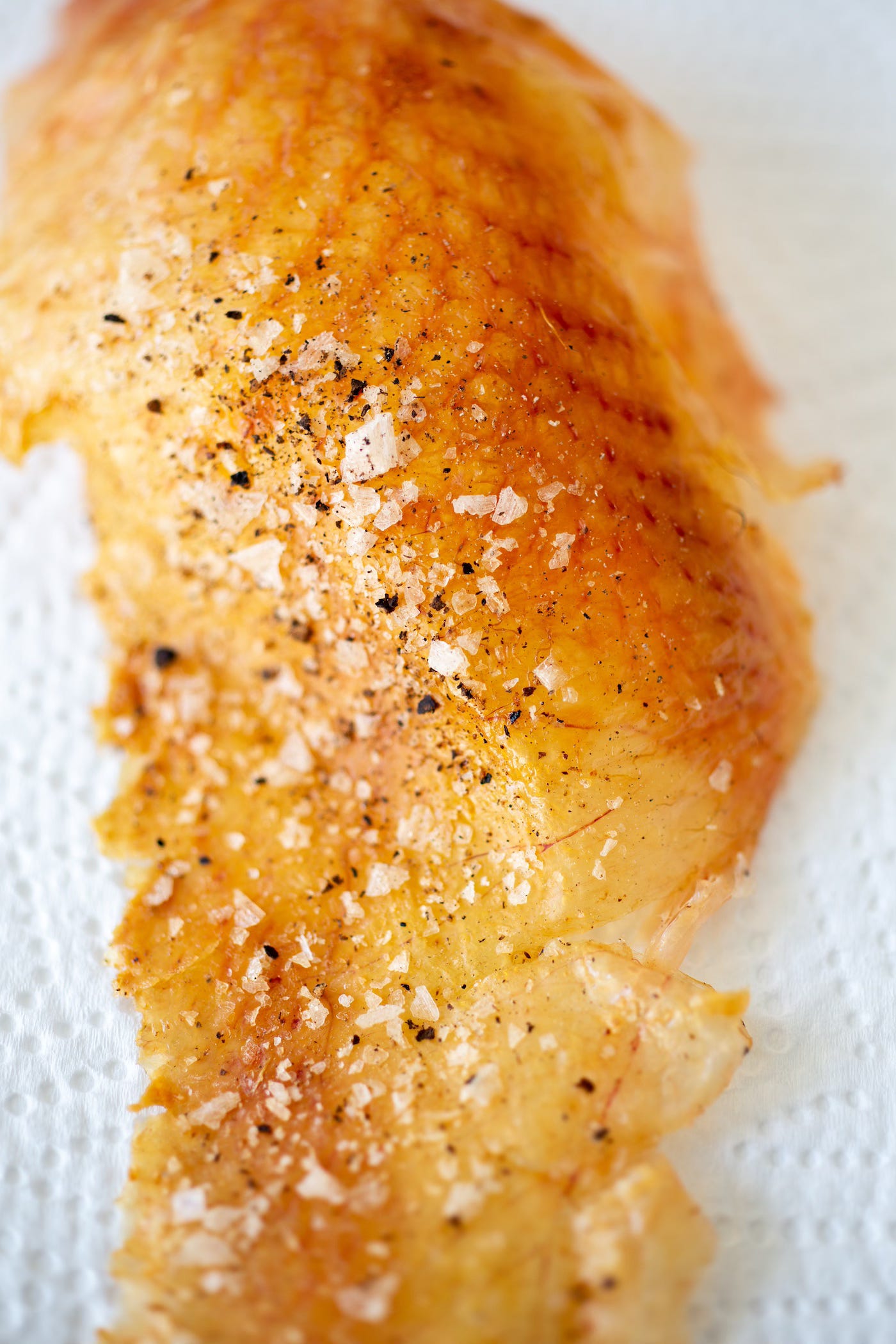
From the first roast we extract all the pan juices, make stock, and skim off the fat from both for making the gravy ahead of time. (The meat conveniently becomes supper.) When it comes to the second roast on Christmas day, the focus is on creating the greatest possible amount of crisp, crackled skin. And because the Weber-ing happens twice, it means there’s also the chance for a ‘dress rehearsal’ – to check heat and cooking time.
Like the pork belly method, the two main ingredients are the meat itself and salt. And because the cooking happens outdoors and independent of electricity supply this was a useful backup when Cape Town experienced rolling blackouts, which is how the roast got its name.
Power-cut chicken
The prep
Key move: trussing
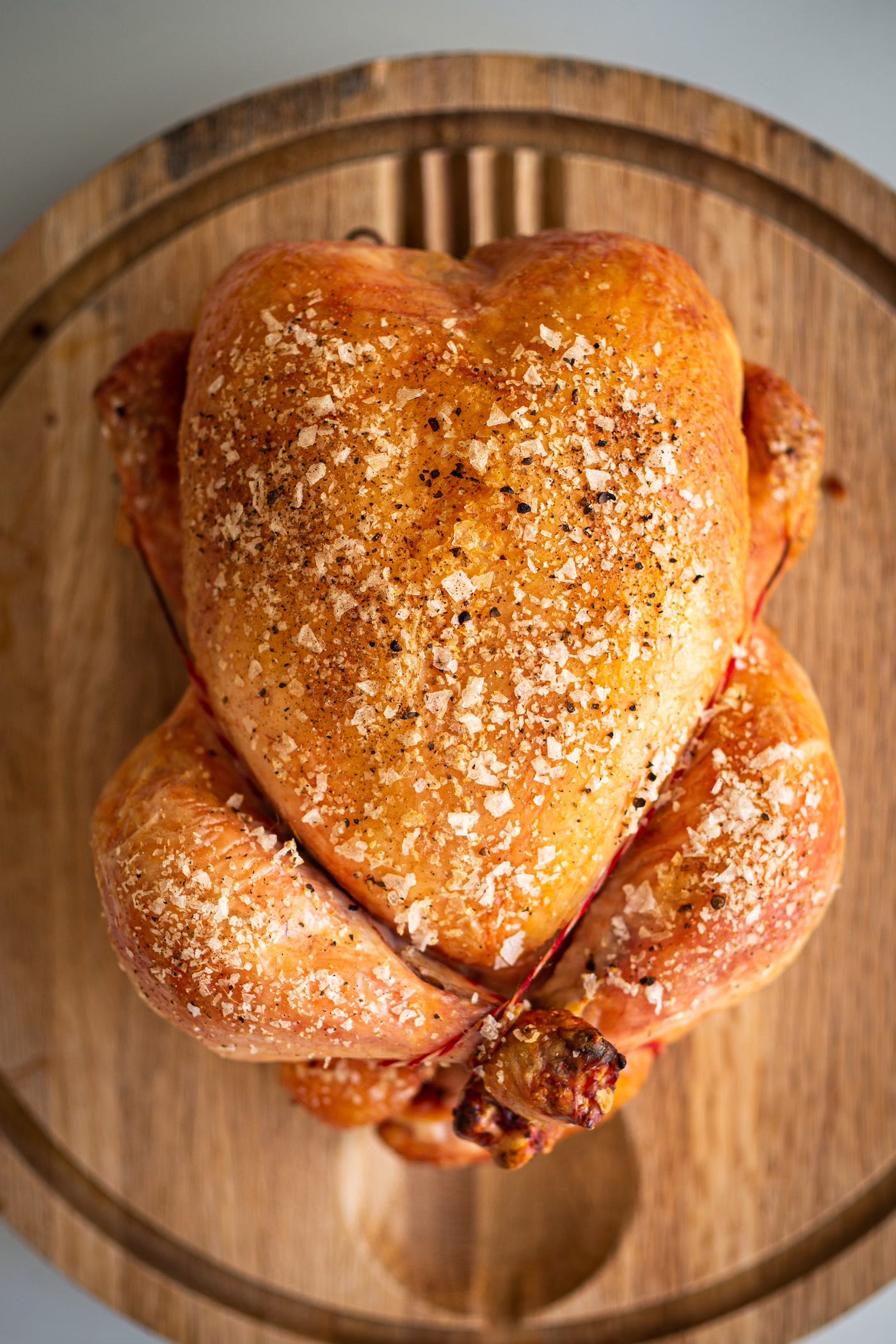
Trussing a chicken creates a neat, compact bundle that cooks more evenly. Place a 2.5kg pasture-reared chicken on a board, breast-side up, with the ankles closest to you.
Take a long piece of string (about 100cm) and position the midpoint underneath the Pope’s nose (the bit resting on the board or tray, between the legs).
Wrap the piece of string on your left over and around the left leg, and the piece on your right over and around the right leg.
Cross the pieces of string in front of the breast, pulling to tighten.
Run the pieces along the sides of breast and around the wings, flip the chicken over and tie a tight knot.