


This week: some short, snappy (for us!) inspiration for a cauliflower mash. Brandon shares a simple but key move to give it enough hold for topping cottage pie or, if serving as a stand-alone side, making a hollow with the back of a spoon for filling with gravy.
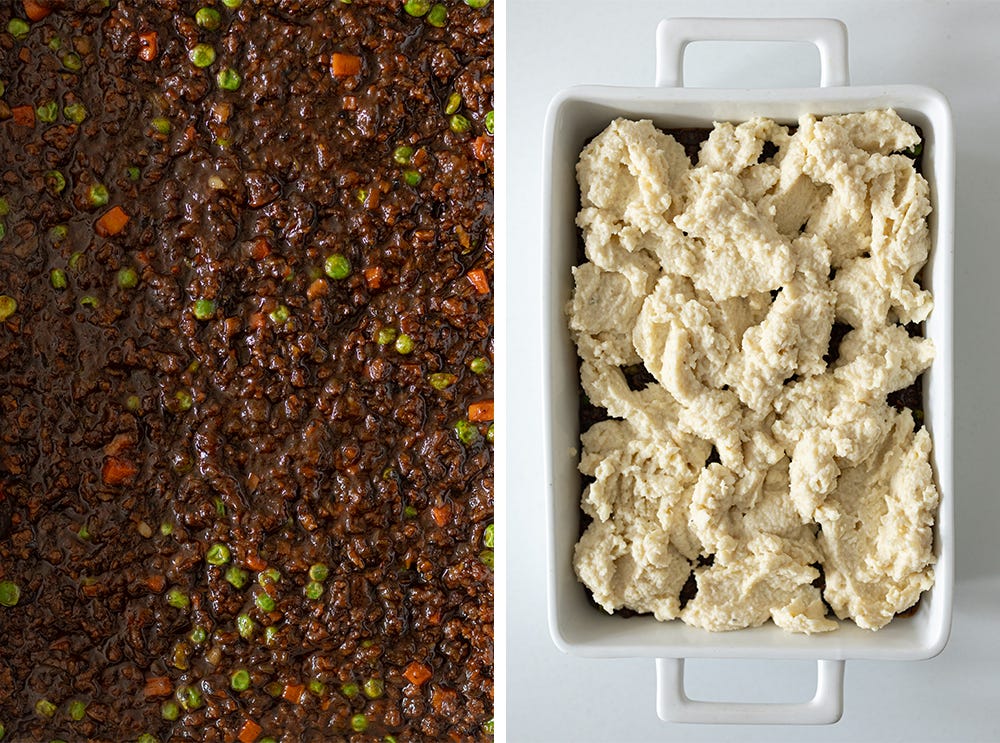
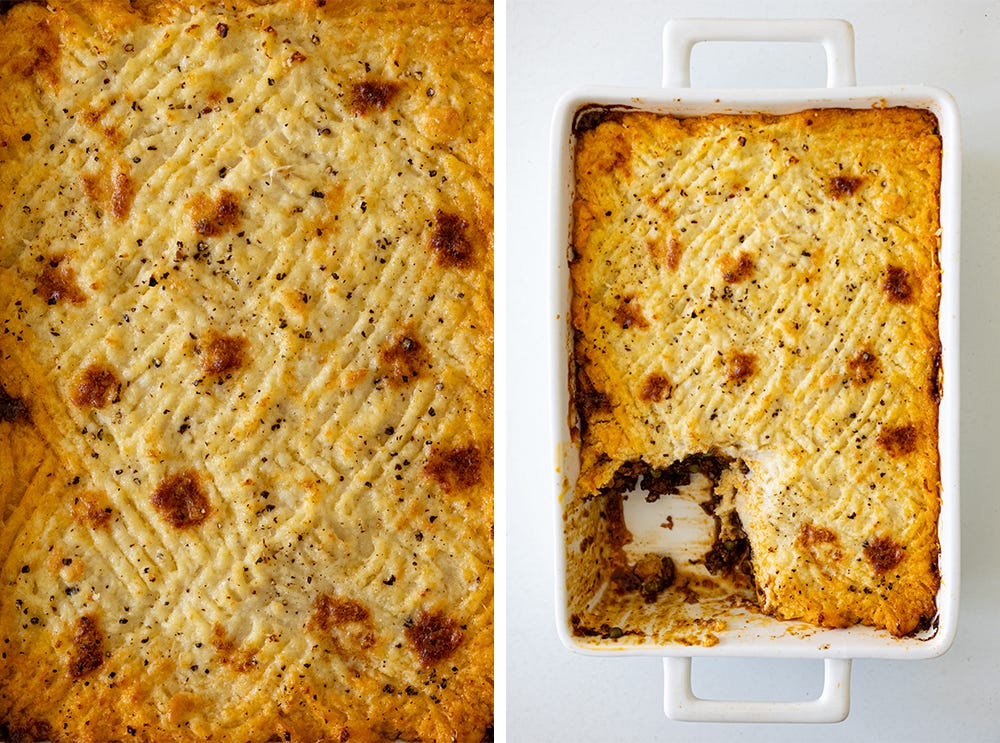
Before reluctantly jumping off the carousel ride of winter cooking, we made shepherd’s pie using the method below with lamb mince, a lamb demi-glace from our local butcher (you can see the intensity it added by the gloss and colour in the meat shot above) and a cauliflower topping. The cauli puree I make is super easy: florets in a pot, top with full-cream milk until almost covered, simmer until tender, blend and season. It’s creamy but floppy, with a consistency closer to something a chef would smear on a plate – definitely not enough hold to top the ‘pie’. So, Brandon found a way to achieve the right consistency and serve a clean-cut square of one of his favourite suppers. Over to him to explain how.
Cauli mash
I remember once reading that ‘cauliflower tastes like sadness’ and although there’s probably an element of truth in there, here’s the thing: you can roast the tears out of it. Florets browned in an oven, go from bland and boring to nutty and crisp, and are definitely on my list of all-time favourite side dishes, so using that as a starting point, and wanting to avoid too much colour to emulate potato mash, here’s a technique worth trying.
Low and slow
Chop the cauliflower into quite small pieces and spread it out on a baking tray. Pop into a 100°C oven for anything up to 90 minutes. What you’re looking for is dehydration rather than ‘cooking’ and at that temperature, you will avoid browning. The florets will shrink a bit and lose their funky flavour and you’ll be left with something that’s cooked and firm.
Steam in milk
Put the florets into a medium pot and add about the same amount of milk as you would to your mashed potatoes. There’s no rule, but if you go with about a centimetre thick layer of milk on the bottom, you’ll probably be good. Now add some butter: again, no rule but a tablespoon or two should do. Bring it to a simmer, put the lid on the pot and let it steam and cook for about 15 minutes, occasionally stirring things around.
Blitz
Now all you have to do is pull out the trusty handheld blender and blitz away. Keep going until you’ve ‘mashed’ everything up as fine and smooth as you can.
Texture not right?
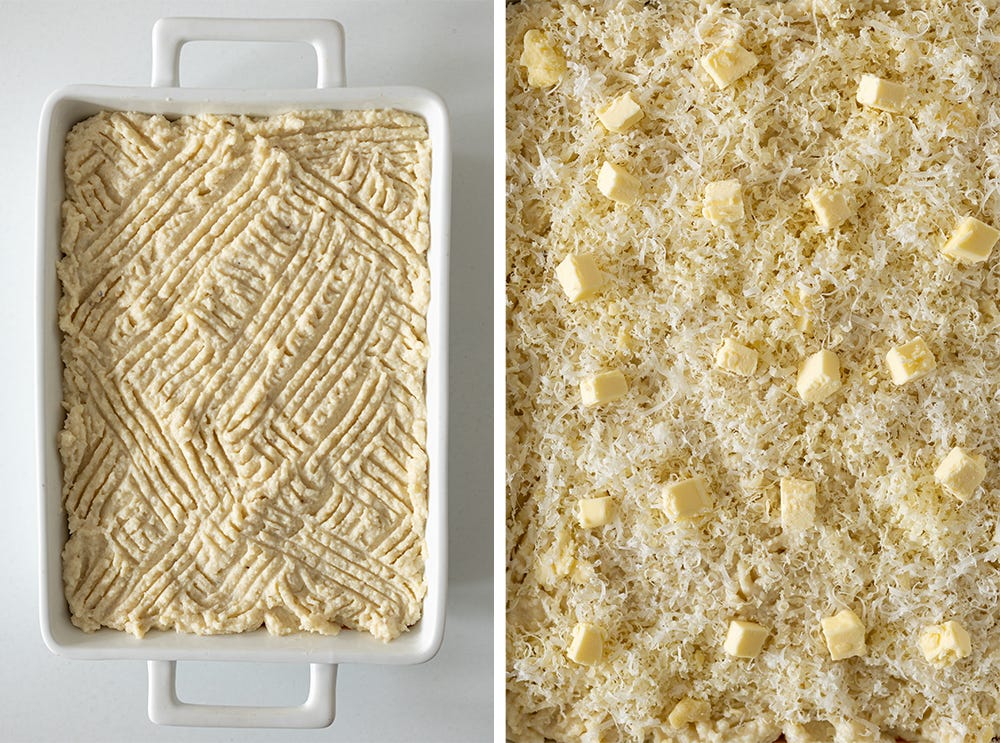
If the end result is too thin, you can just put it all back on the stove and simmer off some of the moisture. And if you find you’ve not added enough milk to blend easily, just add some. You’ll find it’s quite a hardy mixture and you can keep messing with it until you get something that looks and feels remarkably like mashed potatoes and can easily be be spread on top of your cottage pie. You’ll know you’ve cracked it if you can take a fork and drag it across the surface to create a ripple effect, just as you would with the real thing.
For the full cottage pie method click the link below.
